
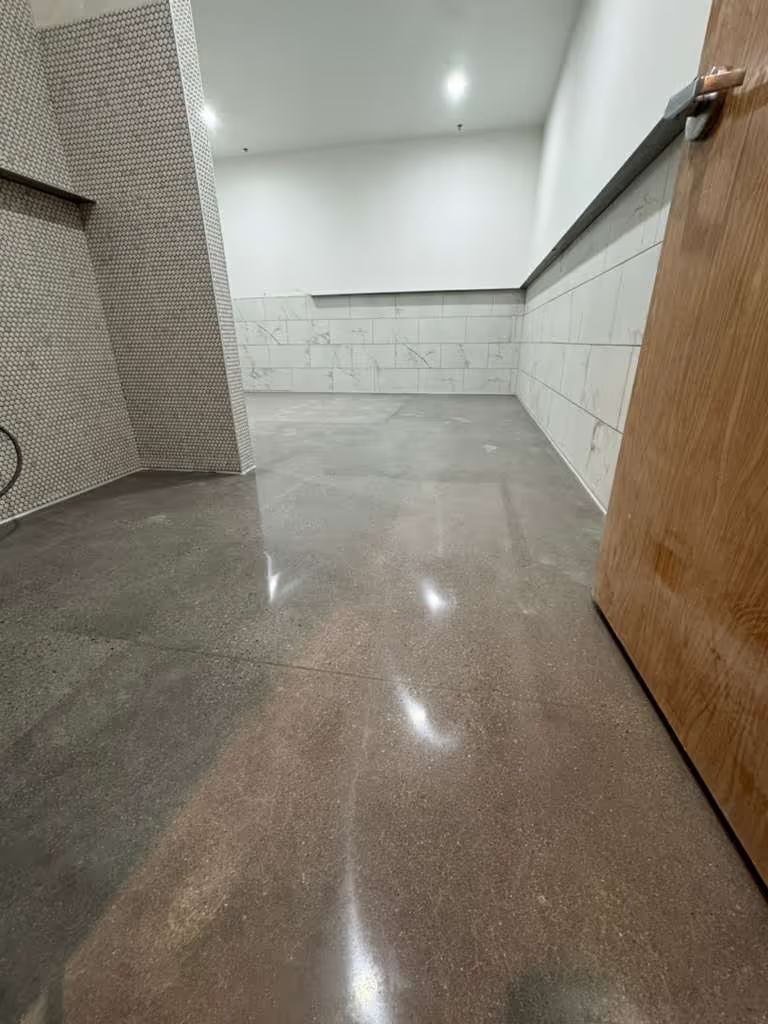

A concrete slab does not always need another flooring material installed over it. For homeowners, retailers, warehouses, and other properties considering polished concrete, the existing slab itself can become the finished surface when its condition and intended use make that approach practical.
The decision should begin with the concrete rather than the final look. Age, previous coatings, cracks, traffic, repairs, and the level of visual variation a property owner is comfortable with can all influence whether polishing, coating, or another treatment makes more sense.
Start With What the Slab Is Telling You
Concrete often carries evidence of how a space has been used. Old adhesive, stains, pits, cracks, patchwork, and worn areas can remain after carpet, tile, or another covering is removed.
This is where concrete repair becomes important before a new finish is chosen. Cracks, holes, damaged edges, and weak areas may need attention first so the floor has a more stable and workable surface for the process that follows.
Decide Whether You Want to Reveal or Cover
Polishing works with the concrete that is already there. Industrial grinders and progressively finer diamond tooling refine the slab, while densification and polishing can create anything from a softer satin appearance to a higher-gloss finish.
A resin coating works differently because it builds a new surface over properly prepared concrete. That can be useful when a property owner wants a more uniform color, decorative flakes, metallic effects, or a system designed around specific exposure conditions.
Understand What Can Stay Visible
Polishing does not erase the history of a slab. Aggregate variation, repaired cracks, previous patching, and differences in concrete color may still be visible after the floor is finished.
For many modern interiors, that variation is part of the appeal. In other projects, however, the owner may want a more controlled appearance, making a coated system the more suitable visual choice.
Traffic Changes the Finish Decision
A quiet residential room and a busy warehouse do not place the same demands on concrete. Foot traffic, forklifts, carts, machinery, vehicle movement, and cleaning routines should all be discussed before deciding on the finish.
Polished floors are often considered for commercial and industrial spaces because the concrete itself remains the wear surface. However, each project should still be evaluated individually, especially where chemicals, oils, moisture, or frequent spills are part of normal operations.
Preparation Drives the Quality of the Result
Both polishing and coating depend on professional surface preparation. Existing coatings, glue, contaminants, or weak surface material may need to be mechanically removed before the next stage can begin.
Repairs also need to be planned carefully. Filling a crack can improve the condition of the slab, but the repaired area may not disappear visually once the floor is polished, so expectations should be discussed before work starts.
Think About Maintenance Before Choosing
Finished concrete is often selected partly because routine cleaning can be straightforward. Regular dust removal helps prevent abrasive grit from building up, while appropriate damp cleaning can handle normal dirt and spills.
Still, no concrete finish is completely maintenance-free. Property owners should understand recommended cleaning products, whether periodic maintenance is expected, and how stains or isolated damage should be handled.
Plan Around Business or Household Downtime
Floor preparation creates dust-control, access, and scheduling considerations even when professional equipment is used. Furniture, shelving, inventory, machinery, or vehicles may need to be moved so the slab can be reached from edge to edge.
The project schedule should include preparation, repairs, polishing or coating, and any required cure or return-to-service period. Commercial properties may also need to plan around deliveries, staff movement, or phased access.
Know When Covering the Slab May Be Better
Some concrete is simply not an ideal candidate for a highly exposed finish. Extensive patching, major visual inconsistencies, or a design brief that demands a uniform decorative surface may point toward a coating system instead.
The best choice is not the one that is most fashionable. It is the one that fits the slab, workload, maintenance expectations, and desired appearance without forcing the concrete into a role it cannot perform well.
Conclusion
Restoring an existing slab can be a smart alternative to automatically covering it, but the decision should follow a careful assessment. Concrete condition, repairs, traffic, visual expectations, preparation, maintenance, and downtime all influence whether polishing or another flooring system is appropriate.
For Los Angeles property owners comparing restoration and coating options, risecoatings.com can provide a useful starting point for exploring polished concrete and related concrete-floor solutions. Beginning with the slab itself helps turn the flooring decision into a practical long-term choice rather than a purely cosmetic one.