
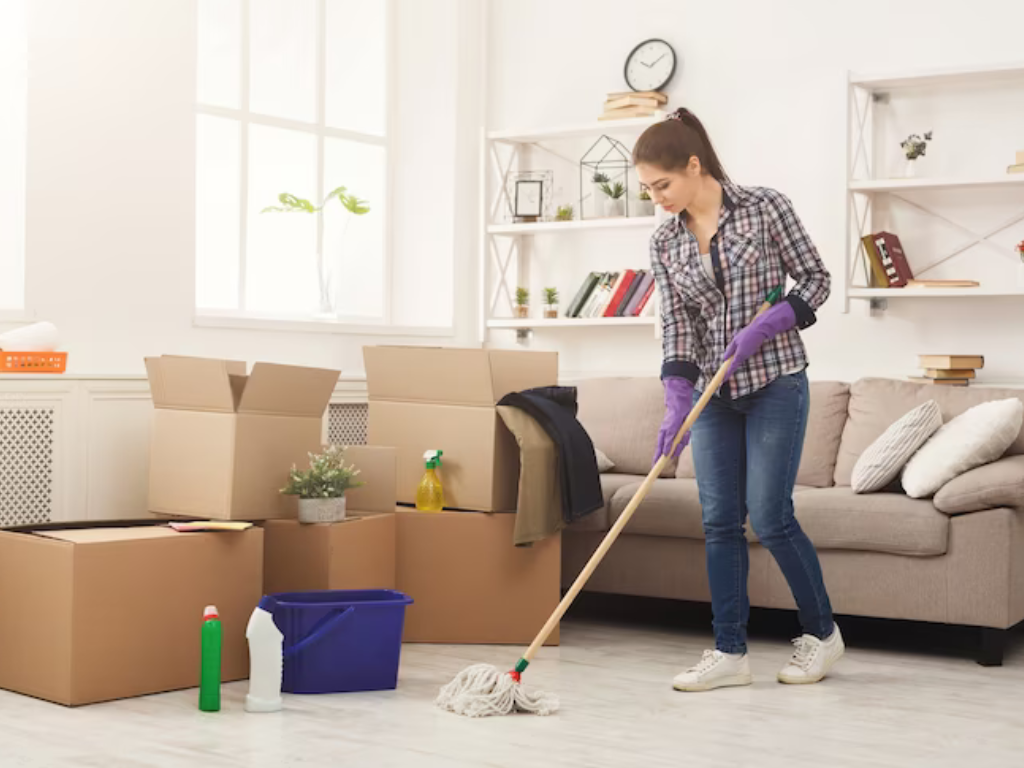

Moving involves boxes, paperwork, transport and countless small tasks, making cleaning easy to leave until the last minute. Planning move out cleaning in advance can make the final days at an old property more manageable and allow each room to be handled systematically once belongings have been removed.
The same principle applies at the new home. Cleaning an empty or mostly empty property can be easier than working around furniture and unpacked boxes. A clear plan can reduce unnecessary repetition and help households focus on the areas that need attention first.
Begin Before Moving Day
Waiting until every box is packed can create unnecessary pressure. Start with areas that are rarely used, such as spare rooms, storage cupboards or shelves that have already been emptied.
Working gradually reduces the number of tasks left for the final day. It also provides an opportunity to sort unwanted belongings rather than transporting items that will simply be discarded after the move.
Clean From High to Low
Dust can fall onto lower surfaces while shelves, fittings and other elevated areas are being cleaned. Working from higher areas downwards can therefore make the process more efficient.
After upper surfaces have been handled, attention can move to counters, cabinets and fixtures before finishing with the floors. A consistent order also makes it easier to track which rooms have already been completed.
Give Kitchens Extra Time
Kitchens often require more work than expected. Cupboards, worktops, appliances and frequently touched areas can accumulate grease, crumbs and residue over time.
Once cupboards have been emptied, clean them systematically rather than switching randomly between tasks. Leaving enough time for the kitchen can prevent it from becoming a rushed job at the end of moving day.
Prepare the New Property Before Unpacking
Where access is available, arranging move in cleaning before furniture and boxes arrive can simplify the process. Empty rooms provide better access to floors, cupboards, corners and other areas that may become difficult to reach later.
Prioritize the kitchen, bathrooms and bedrooms if time is limited. Having these essential spaces ready can make the first evening in the new property more comfortable even if unpacking continues for several days.
Pay Attention to Bathrooms
Bathrooms benefit from a structured approach. Sinks, showers, tubs, mirrors, fixtures and floors can be handled in a logical sequence so that completed areas are not repeatedly disturbed.
Ventilation and storage areas should also be checked where accessible. Emptying cabinets before cleaning provides an opportunity to remove expired or unwanted products rather than packing them for the new home.
Keep Cleaning Supplies Separate
Packing every cleaning product too early can create problems when the final rooms still need attention. Keep a small set of essential supplies separate and clearly labeled.
Include rubbish bags, cloths and other items needed for the last clean. At the new property, having a similar kit readily accessible means you do not have to search through multiple boxes before starting.
Check Forgotten Areas
During a busy move, smaller locations are easy to miss. Inside cupboards, behind doors, shelves and storage spaces may receive little attention once the main rooms have been cleaned.
A final walk-through can help identify these areas. Moving systematically from room to room is generally more reliable than trying to remember individual tasks across the whole property.
Plan Cleaning Around Other Work
Repairs, painting and furniture removal can create additional dust or debris. Cleaning too early may mean the same area has to be handled twice.
Coordinate the schedule so messier tasks are completed before the final clean where possible. At the new property, the same principle applies if decorating or minor repairs are planned before moving in.
Conclusion
Cleaning during a move becomes easier when it is treated as a planned part of the relocation rather than a final emergency task. Starting early, working room by room and keeping essential supplies accessible can reduce pressure during an already busy period.
The timing of other work matters as well. By coordinating cleaning with packing, repairs and furniture movement, households can leave their previous property in an orderly condition while making the new home more comfortable for unpacking and settling in.